
“More Than Colors: How Karate Belts Represent Growth and Leadership”
More Than Colors: How Karate Belts Represent Growth and Leadership
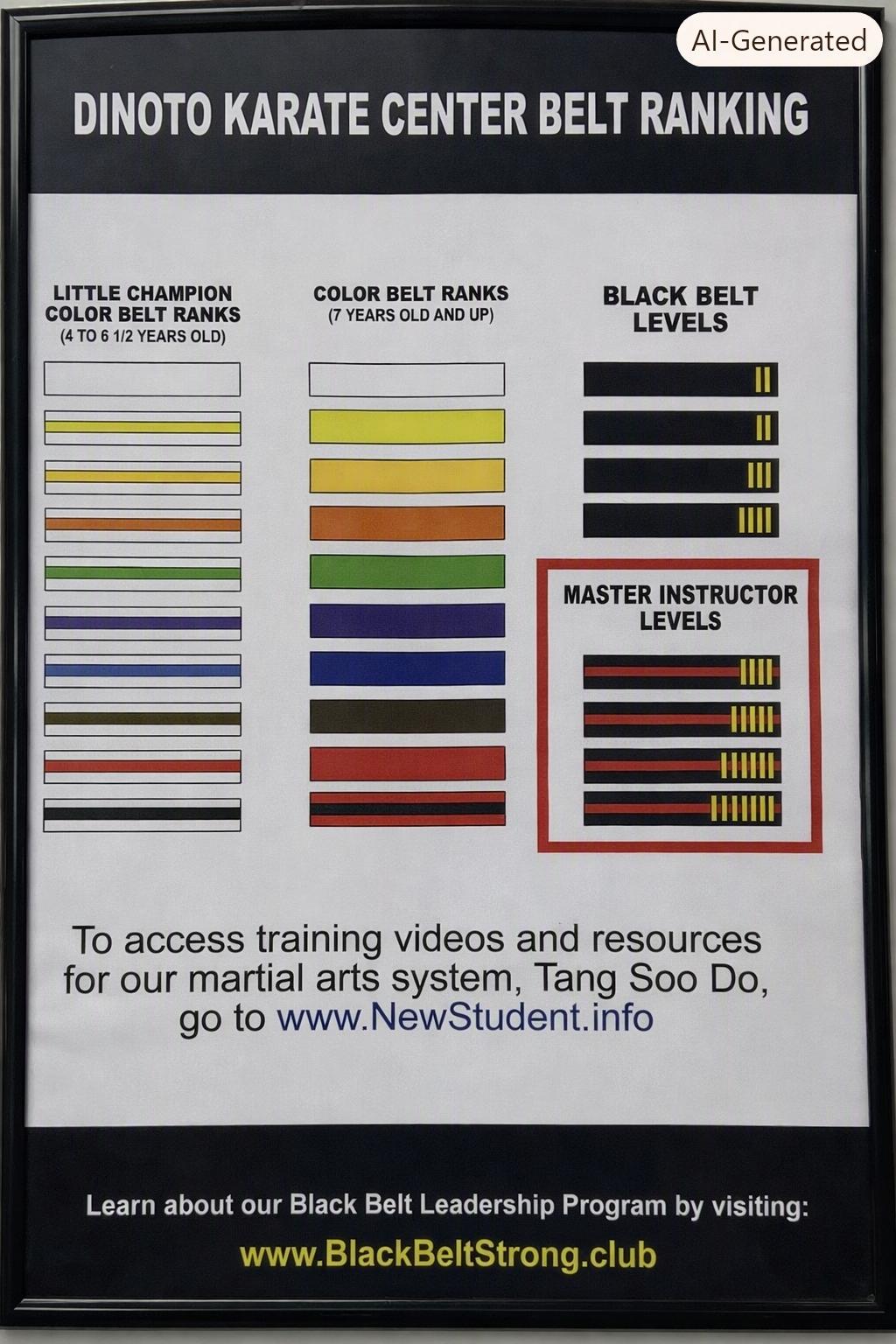
At Dinoto Karate Center, the journey through karate is marked by a series of belt colors that represent growth, discipline, and achievement. For high school students, these belts are more than just colors; they symbolize stages of personal development both on and off the mat. While there are many ranks in karate, four key color groups can help illustrate the progression: beginner, developing, advanced, and leadership levels.
Beginner Level: White, Yellow, and Gold Belts
The first stage begins with the beginner belts: white, yellow, and gold. A white belt represents a fresh start—a student stepping into the dojo with an open mind and a willingness to learn.
As students progress to yellow and gold, they begin building a strong foundation. At this stage, high school students learn basic techniques, stances, and respect for the art. It is about forming good habits, listening carefully, and developing the confidence to try something new.
Developing Level: Orange, Green, and Purple Belts
Next comes the developing stage, which includes orange, green, and purple belts. This is where students start to gain greater control and understanding of their movements. Techniques become sharper, and combinations become more complex.
High school students at this level often begin to see the connection between effort and progress. They also learn perseverance, as advancement requires consistent practice and dedication. This stage can be challenging, but it is where real growth begins to take shape.
Advanced Level: Blue, Brown, and Red Belts
The third group is the advanced stage, which includes blue, brown, and red belts. At this point, students have a strong grasp of karate fundamentals and are focused on refining their skills.
Movements become more precise, and students are expected to demonstrate discipline, focus, and leadership qualities. High school students at this stage often assist lower-belt students by teaching basic techniques and setting a positive example.
The Cho Dan Bo, or recommended black belt, is also part of this phase. It represents a student who is preparing mentally and physically for the transition to black belt.
Leadership Level: Black Belt and Beyond
Finally, the leadership stage includes the black belt and the degrees that follow, including first degree, second degree, third degree, fourth degree, and beyond.
Achieving a black belt is a major milestone, but it is not the end. Instead, it marks the beginning of a deeper journey. At this level, students are expected to embody the core values of karate: respect, integrity, and perseverance.
High school students who reach black belt often become role models in their schools and communities, demonstrating confidence, responsibility, and maturity. As they advance through the different degrees, they continue to grow not only as martial artists, but also as leaders.