
A Simple Guide to Inflation
A Simple Guide to Inflation
A simple guide to what inflation really means, why it happens, and how it affects students and families.
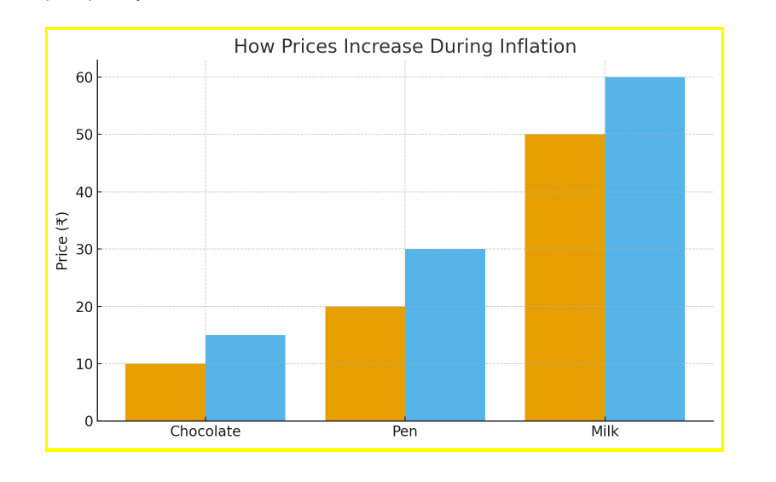
Ever wondered why the prices of everyday things, from chocolates to pens, seem to rise over time? Inflation is the rise in the general price level of goods and services in an economy over time. When inflation occurs, each unit of currency buys fewer goods and services than before, reducing purchasing power.
At its core, inflation happens when the money circulating in an economy grows faster than the economy’s ability to produce goods and services. This imbalance between supply and demand creates pressure on prices. Central banks around the world try to maintain moderate inflation because a small amount encourages spending and investment, but high or unpredictable inflation destabilizes economic decision-making.
Major Causes of Inflation
One of the major causes of inflation is demand-pull inflation, which occurs when demand is higher than supply. If consumers suddenly have more income due to tax cuts, increased government spending, or easy credit, they tend to buy more products. But if companies cannot expand production fast enough, they respond by raising prices.
Another cause is cost-push inflation, which occurs when the cost of production rises. For example, if global oil prices rise, transportation and manufacturing become more expensive, so companies increase prices to make up for their costs.
There is also built-in inflation, which emerges from the expectation that prices will rise in the future. Workers then demand higher wages to maintain their purchasing power, and businesses raise prices to cover those wages, creating a cycle.
Examples of Inflation
A strong historical example is the hyperinflation in Zimbabwe in the late 2000s, where poor economic policies and excessive printing of money caused prices to double almost daily.
More moderate and common examples include India’s inflation episodes, such as the rise in food prices due to supply shortages during weak monsoon seasons. Similarly, the global inflation surge after the COVID-19 pandemic was caused by a mix of supply chain disruptions and governments injecting money to support economic recovery. This resulted in everything from electronics to groceries becoming more expensive worldwide.
How Inflation Is Measured
Inflation is measured through price indices such as the Consumer Price Index, which tracks the cost of a typical basket of goods and services purchased by households. When these indices rise, it signals that inflation is taking place.
How Inflation Is Controlled
Central banks like the Reserve Bank of India respond using monetary policy tools such as raising interest rates to reduce borrowing and lower demand. Governments may also intervene through fiscal measures, subsidies, or supply reforms to ease price levels.
With balanced policies and steady economic growth, inflation can be kept within a range that supports stability, protects purchasing power, and ensures long-term prosperity.