
Netflix: Understanding the Subscription-Based Streaming Model and Tiered Pricing Strategy
Netflix’s Business Model and Pricing Strategy
I first became interested in Netflix’s business model when I noticed that many of my friends and family used it daily for watching movies and series. While reading an article about the streaming industry, I realized that Netflix is not just a platform for entertainment but also a fascinating example of how companies design pricing strategies to attract different kinds of customers.
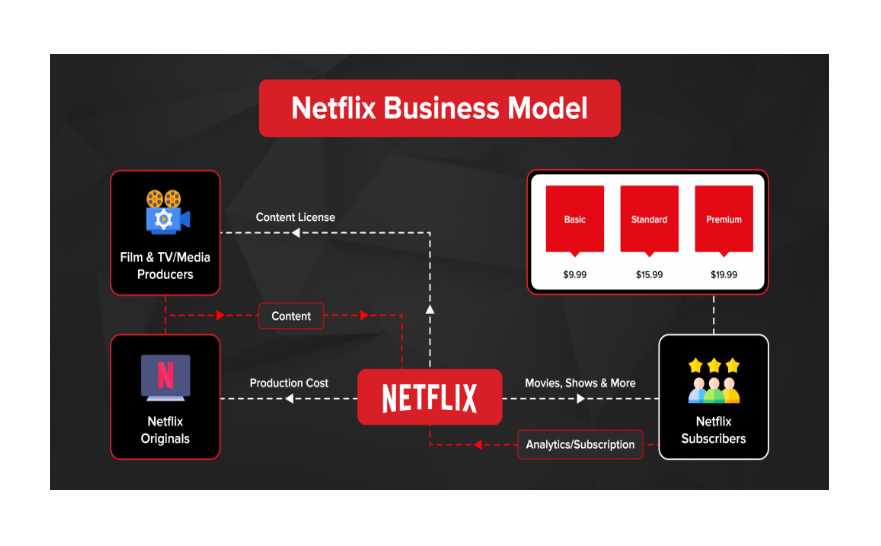
Netflix is a subscription-based streaming service. This means that instead of paying for each movie or show separately, users pay a fixed monthly fee to access a large library of content. The idea is simple: once you subscribe, you can watch as many shows or films as you want during that month. This model is different from traditional television, where viewers often had to pay for cable packages or rent individual movies.
The company also uses a tiered pricing strategy, which means it offers different subscription plans at different price levels. For example, Netflix usually provides a basic plan, a standard plan, and a premium plan. Each plan offers slightly different features. The basic plan is the cheapest but may limit the video quality or allow only one device to watch at a time. The standard plan costs more but allows better video quality and more devices. The premium plan is the most expensive but offers the best video resolution and allows multiple people to watch simultaneously.
This strategy allows Netflix to serve different types of customers. Students or individuals who want to save money may choose the cheaper plan, while families may prefer the premium plan because several people can watch at the same time. In this way, Netflix can reach a larger market while maximizing its revenue.
Another important part of Netflix’s strategy is original content. The company invests billions of dollars each year to produce its own shows and movies, such as Stranger Things, The Crown, and Money Heist. These exclusive programs encourage people to keep their subscriptions because they cannot watch these shows on other platforms. This helps Netflix build customer loyalty and stand out from competitors like Disney+, Amazon Prime Video, and HBO Max.
As a student, I have personally experienced how this pricing strategy works. Sometimes my friends and I share a family subscription plan so that we can watch different shows at the same time. This makes the service feel more affordable for us, even though the total price of the premium plan is higher.
However, Netflix also faces challenges. Competition in the streaming industry is increasing, and many companies are launching their own platforms. Some users may cancel their subscriptions if prices rise too much or if the content is not appealing enough.
Through studying Netflix, I learned that pricing strategies are not just about setting a price. Companies must carefully design plans that balance affordability for customers with sustainable profits for the business. The subscription model and tiered pricing strategy have helped Netflix grow into one of the largest streaming platforms in the world. For students like me, it also shows how everyday services we use can teach important lessons about business and economics.
Reference: How Does Netflix Make Money?