
Belt System Origins: A Tradition That Measures More Than Skill
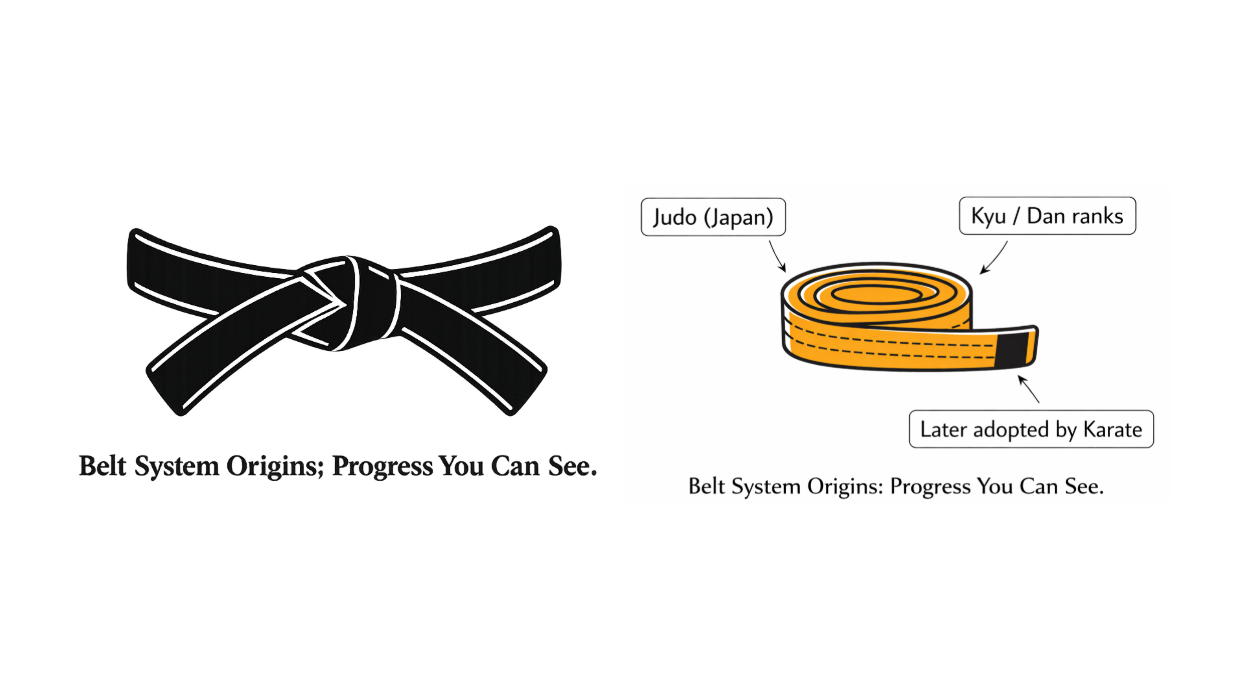
Belt System Origins: A Tradition That Measures More Than Skill
The belt system is often seen as a simple way to rank martial artists, separating beginners from advanced students with a change in color. However, the origins of belts are rooted in something more meaningful than a visual label. The belt system was created not only to organize training, but also to represent growth, discipline, and the mindset needed to improve over time. While many people assume belts have always been part of martial arts, the truth is that the system is relatively modern and was shaped by the need to make learning structured and motivating.
In fact, the earliest versions of martial arts did not use colored belts at all. In many older traditions, students were recognized through informal reputation, personal teaching relationships, or the approval of a master. Progress was real, but it was not always displayed. As martial arts spread to larger groups and public schools, instructors needed a clearer way to track development. A visible ranking system made it easier to place students at the right level, teach safely, and give learners something concrete to work toward.
One key influence on modern belt ranking came from Japan, particularly through judo. Judo’s founder, Jigoro Kano, introduced a structured system that separated beginner and advanced practitioners using different levels. This idea was powerful because it created a training path that felt achievable. Instead of mastery being a distant concept, students could aim for the next step in front of them. Over time, this approach spread beyond judo and shaped how many martial arts would later organize their own progression systems.
As karate became more widely taught, instructors adopted belt ranks to help students understand improvement in stages. It also fits the culture of discipline within martial arts. A belt did not simply mean someone could fight better; it suggested they had shown respect, consistency, and the ability to learn from correction. In other words, the belt became a symbol of character as much as technique. The higher the belt, the more responsibility the student carried to represent the art with control and humility.
Many people today believe the belt colors have ancient meanings, as if each shade was invented centuries ago with deep symbolism. However, many color systems were developed later, often differing from style to style. Some schools added more belt colors to create smaller milestones, helping students stay motivated through long periods of training. The goal was not to make martial arts feel easier, but to make progress visible in a journey that demands patience. Training can be repetitive and slow, and belts become a way to remind students that effort is adding up even when improvement feels invisible.
“Earn it, don’t expect it.”
A motto my instructor once repeated was, “Earn it, don’t expect it.” Over time, I understood that this is the real message behind belts. A belt cannot be bought, borrowed, or claimed through confidence alone. It is earned through showing up, being corrected, failing, and trying again. The belt system, at its best, teaches that progress is not an instant reward. It is proof of time, struggle, and commitment being turned into growth.
The most respected martial artists understand that belts are not the destination. Even a black belt is not an ending, but a sign that the student is ready to learn with greater seriousness. The origins of the belt system reflect this truth. It was never meant to inflate pride or create superiority. It was created to guide students through a structured path where discipline, patience, and humility are trained alongside strength. In the end, the belt is only cloth, but what it represents is the mindset that keeps a martial artist improving for life.
Works Cited
Kano, Jigoro. Kodokan Judo. Kodansha International, 1994.
Funakoshi, Gichin. Karate-Do: My Way of Life. Translated by Tsutomu Ohshima, Kodansha International, 2004.
Green, Thomas A., and Joseph R. Svinth, editors. Martial Arts of the World: An Encyclopedia of History and Innovation. ABC-CLIO, 2010.