
Ray Dalio Mapped the Rise and Fall of Every Empire. Where does India Fit>
Ray Dalio Mapped the Rise and Fall of Every Empire. Where Does India Fit?
Ray Dalio's Big Cycle framework has been widely applied to analyse the decline of American hegemony and the rise of China. Less attention has been paid to where India — the world's most populous nation and fastest growing major economy — sits within the same framework. So I decided to find out.
Dalio is the founder of Bridgewater Associates — one of the world's largest hedge funds managing over $150 billion in assets. In 2021 he published Principles for Dealing with the Changing World Order — a study of 500 years of history examining how empires rose, peaked and collapsed. His central argument is simple but unsettling — the same cycle that built every great power eventually brought it down. The seeds of decline are always planted during the years of greatest success.
The Big Cycle — In Simple English
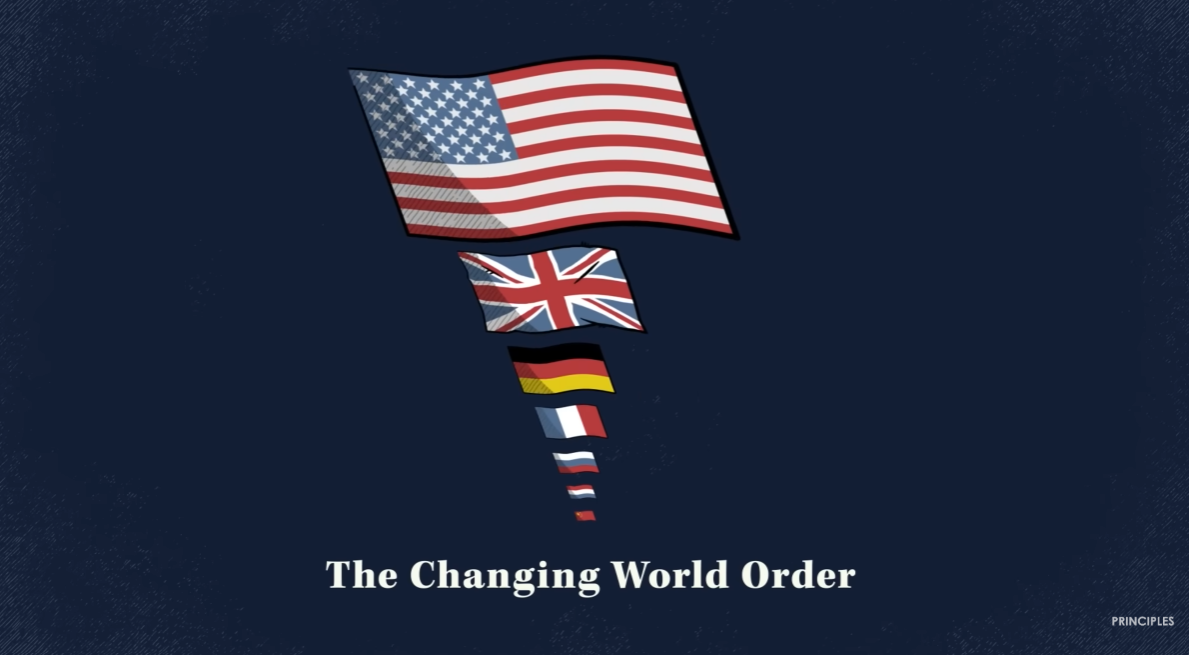
Every empire follows the same arc. A dominant power emerges from conflict. Prosperity follows. Debt grows. The currency becomes a reserve currency. Wealth gaps widen. Internal conflicts brew. The bubble bursts. A new challenger rises. The cycle repeats.
It happened to the Dutch, the British and now the Americans. The 1944 Bretton Woods agreement made the dollar the world's reserve currency — and Dalio argues that single factor was more responsible for American dominance than anything else. According to the IMF's April 2026 World Economic Outlook, India's GDP stands at $4.15 trillion — growing at 7.3%, the fastest of any major economy. Every headline says India is rising. But Dalio doesn't ask where you are. He asks where you are in the cycle.
Crack 1 — Education Is Being Hollowed Out
Dalio places education as the first parameter of an empire's rise. In May 2026 NEET — India's sole gateway to medical education for 2.27 million students — was cancelled after a pre-circulated paper matched the actual exam. In 2024, Bihar Police arrested 13 people who had allegedly paid ₹30–50 lakh each for the question paper. The Supreme Court of India confirmed at least 155 students directly benefited from the leak.
When the gateway to meritocracy is for sale the empire's most important foundation hollows out from within. Dalio writes that wealth gaps become self-reinforcing because rich people use their resources to give their children better education and influence systems to their advantage. India's entrance exam corruption is that process made visible.
Crack 2 — The Money Is Quietly Leaving
According to Business Standard, eight of the thirteen months between January 2025 and January 2026 recorded negative net FDI flows. Repatriation doubled from $2.07 billion to $4.92 billion. January 2026 recorded a net outflow of $1.3 billion despite $5.7 billion in gross inflows. Foreign investors are bringing money in but taking out more — exactly what Dalio describes as finances weakening beneath a strong surface.
Crack 3 — The Internal Conflict Is Already Visible
According to the World Inequality Report 2026 published by the World Inequality Lab — co-edited by economists including Thomas Piketty — the top 1% of India's population holds 40% of national wealth. The bottom 50% receives just 15% of income. That gap didn't narrow across a full decade of high growth.
Azim Premji University's State of Working India 2026 found that 67% of unemployed Indians aged 20–29 are graduates — with youth unemployment at nearly 40%. India is producing educated people faster than jobs for them. That gap between aspiration and opportunity is precisely what Dalio describes as the fuel for internal conflict.
On May 15 2026, Chief Justice of India Surya Kant described unemployed young Indians as "like cockroaches" who "attack the system." 55,000 people joined the satirical Cockroach Janata Party within days. What makes this significant in Dalio's framework is not the remark itself — it is what it reveals. A system pathologising its own frustrated youth rather than asking why they are frustrated.
Crack 4 — No Reserve Currency
Only 5% of India's trade is settled in rupees. The rupee hit ₹96 to the dollar in 2026 with the RBI imposing controls to manage the slide. A reserve currency is not declared — it is earned through trade depth, financial stability and global trust. India is nowhere near that threshold yet. And without it Dalio's framework suggests India cannot complete the cycle.
Where Does India Actually Stand?
I am 16. I grew up in India. I have genuine skin in this question.
Dalio's framework doesn't say India can't rise. It says rising requires more than GDP headlines. Corrupted exams hollow out meritocracy. Capital flight signals eroding confidence. A wealth gap that growth couldn't narrow signals structural failure. Graduate unemployment signals a demographic dividend turning into a liability. A currency the world won't hold signals power not yet translated into authority.
None of this is fatal. All of it is fixable. But fixing it requires acknowledging it first — which is something India's headlines consistently fail to do. The American world order is visibly weakening. India's window is real. But windows close — usually faster than anyone expected.
The question isn't whether India is rising. It's whether it's rising in the ways that actually matter — or accumulating the exact vulnerabilities Dalio watched bring every empire to its knees.
Sources
- IMF World Economic Outlook, April 2026
- World Inequality Report 2026, World Inequality Lab — Thomas Piketty et al.
- State of Working India 2026, Azim Premji University
- Reserve Bank of India Bulletins 2025–2026
- Business Standard — FDI data sourced from RBI
- Supreme Court of India — 2024 NEET judgment
- Ray Dalio, Principles for Dealing with the Changing World Order, 2021