
How Pitch Conditions Affect Spin vs. Pace Dominance
How Pitch Conditions Affect Spin vs. Pace Dominance
Introduction
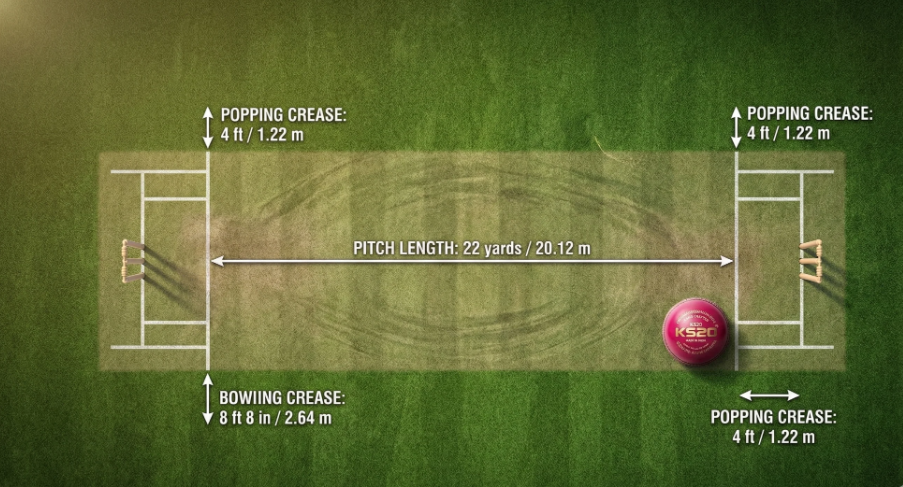
In cricket, the outcome of a match is shaped not just by the players on the field, but by the surface they play on — the pitch. The central strip of 22 yards between the wickets plays a crucial role in determining whether pace bowlers or spin bowlers dominate a contest.
Understanding how pitch conditions influence this balance is essential for captains, coaches, and analysts alike. The nature of the soil, grass cover, moisture content, weather, and wear over time all contribute to how the ball behaves after it lands. This article explores how those conditions favour either pace or spin, and what that means for team selection and match strategy.
Soil, Construction and Grass Cover
One of the foundations of how a pitch behaves is its construction — the composition of the soil, how it has been rolled and prepared, and whether there is grass on the surface.
Research shows that pitches with a higher sand content tend to allow greater deviation for spin-bowled deliveries and slower rebound pace when the ball bounces. For example, an experimental study comparing two pitches found that a “bespoke international pitch” with around 43.28% sand content produced significantly slower reflection pace and larger deviation than a “common Australian pitch” with around 7.44% sand content.
In practical terms:
- A hard, compacted pitch with little grass and high clay content tends to deliver greater bounce and speed, favouring pace bowlers.
- A pitch with more sand, less grass, or drier top layers tends to assist spin bowlers because the ball “grips and turns”.
- Grass cover can influence seam movement. “Green” pitches with significant grass typically help fast bowlers by promoting seam and swing.
Thus, teams often pick bowling attacks based on how the pitch is built and maintained.
Moisture, Weather and Preparation
Weather and moisture content also play key roles in determining pitch behaviour. A pitch that retains moisture due to rain, dew, or humidity tends to be slower and can provide seam movement for pace bowlers, especially in the early overs.
Conversely, in hot and dry conditions, the surface dries out and often becomes cracked or dusty. This tends to favour spin. For instance, in the Indian sub-continent, hot and dry weather combined with local soils and preparation techniques often leads to slow, turning surfaces.
Other factors include:
- Overcast or humid conditions can favour swing and seam for pace bowlers.
- If the pitch dries and begins to crack, especially in multi-day matches, spinners get more assistance because the ball can turn sharply off rough spots or footmarks.
Time and Pitch Deterioration: The Test-Match Factor
A major difference between formats such as Test cricket and T20 cricket is the time available for the pitch to deteriorate. In longer formats, the pitch evolves over multiple days.
Early in a Test match, the surface may favour pace if it is hard and green, or batting if it is flat. As the game progresses, footmarks, wear, drying and cracking often create conditions ideal for spin. For example, many Indian Test venues are known to slow down and turn significantly by Day 4 or Day 5.
In shorter formats, such as T20, the pitch has less time to change dramatically. Pace bowlers might dominate early on, though spinners still play a strategic role, especially in the middle overs or on surfaces prepared for spin.
Regional Patterns and Empirical Observations
Different cricketing regions show clear patterns based on pitch and climate. Some broad observations include:
- In sub-continental venues such as India, Sri Lanka and Bangladesh, pitches are often dry, dusty and supportive of spin bowling. Grass cover is minimal, and the soil and climate cause the surface to wear into spin-friendly conditions.
- In Australia and South Africa, pitches tend to be hard, bouncy and more favourable to pace bowlers. The soil composition, rolling techniques and weather help the ball bounce and carry.
- In England and New Zealand, where moisture and grass cover are higher, seam and swing bowlers often have the edge early in matches.
These patterns influence how teams select bowling line-ups when touring foreign countries or preparing home venues.
Strategic Implications for Teams
Understanding pitch conditions has several strategic implications:
- Bowling Attack Composition: Captains may choose more spinners when the surface is dry and worn, or favour quick bowlers on fast, green tracks.
- Batting Strategy: On turning surfaces, batsmen may use more footwork, sweeps and spin-reading skills. On bouncy tracks, they may prefer back-foot play and leave more deliveries outside off stump.
- Match Timing and Decision-Making: The toss becomes crucial. When to bat or bowl first depends on how the pitch is likely to behave. For example, batting first on a surface that deteriorates may be wise.
- Venue Preparation and Home Strategy: Home boards often prepare pitches to favour their own strengths, such as spin-friendly pitches in India. Visiting teams must adapt their selection and tactics accordingly.
Recent Research and Quantitative Insights
Scientific studies of cricket pitches provide numerical evidence for how surface properties affect ball behaviour. For instance, in one study, 276 deliveries were bowled onto two pitches with contrasting soil properties. The pitch with higher sand content, around 43.28%, showed significantly greater spin and lower rebound pace than the one with low sand content, around 7.44%.
Another research effort found that no single measurement of surface hardness or friction could reliably predict pace or bounce. However, a combined model using several measurements could give good predictions of pace, while bounce was influenced by deformation of the pitch over time.
These studies support the view that pitch behaviour is measurable, and that variations in soil, moisture, surface integrity and grass cover directly influence whether spin or pace will dominate.
Limitations and Complexities
Despite the clear relationships between pitch conditions and bowling dominance, pitch behaviour is not completely predictable. Some caveats include:
- Even well-prepared green pitches may spin later if exposed to sun and footmarks.
- Weather changes, such as unexpected rain or sudden drying, can alter expected behaviour mid-match.
- The ball used, wear on the pitch, footmarks and historic match usage all add complexity.
- Globalisation of grounds and modern pitch preparation technologies have reduced extremes, with some pitches prepared to be “fair” rather than heavily favouring one style.
Thus, while trends hold, surprises are always possible.
Conclusion
Pitch conditions are a foundational element in cricket strategy, determining whether pace or spin will have the upper hand. Soil composition, grass cover, moisture, time and regional climate all interact to shape how the ball behaves.
Teams that successfully interpret these conditions and tailor their selection and tactics accordingly gain a significant edge. As research and measurement become more sophisticated, clubs and boards gain better tools to anticipate pitch behaviour and adapt.
Nonetheless, cricket’s ever-changing surface keeps an element of unpredictability alive. In the end, understanding the pitch means understanding the heart of the game.
References
- Crowther, R.H., Gorman, A.D., Spratford, W.A., & Kountouris, A. (2020). Examining environmental constraints in sport: Spin characteristics of two cricket pitches with contrasting soil properties. European Journal of Sport Science, 20(8), 1005–1012.
- James, D.M., Carré, M.J., & Haake, S.J. (2005). The dynamic behaviour of cricket balls during impact and variations due to grass and soil type. Sports Engineering.
- Usman, H., Hamza, M.M., Hamid, P.M., & Ahmad, T. (2016). Improvement of geotechnical properties of cricket pitches. Journal of Civil & Environmental Engineering, 6(6), 256.
- “Types Of Cricket Pitches – How They Define the Outcomes.” CricketIRA.com. (2024).
- “Cricket pitch.” Wikipedia. (2025).
- https://www.khelspace.com/blogs/fitness/the-cricket-pitch-crickets-most-powerful-variable-and-how-it-shapes-match-outcomes